
Free vs Paid OnlyFans Pages: Which Fits a Light User
OnlyFans pages split into two access models: free and paid. A light user visits a few times a week, not daily, so the cost question is not about volume but about how each model charges for the attention actually used. Free pages set the subscription price to $0 and earn through pay-per-view messages and tips. Paid pages charge a subscription, with the platform range running from $4.99 to $49.99 and typical pages sitting between $4.99 and $15.
This comparison works through the numbers a light user can verify: subscription cost, pay-per-view spending, tipping norms, and what happens when a page changes its price. It also covers why ranking sites exist at all. OnlyFans has no built-in discovery feed or directory, so finding pages means going through external listings such as BestOnlyFans.
Access Shape
The two models differ in what a subscription unlocks. A free page charges nothing to follow and places most individual items behind pay-per-view. A paid page charges upfront, and the subscription usually covers the main feed for that period.
Neither model guarantees a fixed content volume. What differs is when money changes hands: before access on a paid page, after a specific unlock on a free page. The table below compares the concrete values used throughout this article.
| Item | Free page | Paid page |
|---|---|---|
| Subscription price | $0 | $4.99 to $49.99, typical $4.99 to $15 |
| Main revenue source | Pay-per-view and tips | Subscription, plus tips and PPV |
| Platform fee | 20% | 20% |
| Creator share | 80% | 80% |
The 20% platform fee applies to everything: subscriptions, tips, and pay-per-view unlocks. Creators keep 80% in both models. That means the fee structure does not decide which model suits you; your own spending pattern does.

Spend Pattern
A light user’s spending is irregular. The subscription is the only predictable line in either model, and a free page does not even have that. What follows is the list of cost points to track.
- Paid subscription: a fixed monthly charge, commonly between $5 and $10.
- Free subscription: no monthly charge, but no included unlocks either.
- Pay-per-view unlocks: variable, priced per item by the creator.
- Tips: optional on both models, but expected more often on free pages.
- Renewal: automatic on paid pages until cancelled or the price changes.
A light user who follows several free pages may unlock nothing in a given week and spend nothing. The same user on a paid page pays the subscription whether or not the page is opened that week. That gap between use and payment is the core of the comparison.
Practical tip: before subscribing to any paid page, check the renewal date and the current price in the billing screen. If a creator raises the price later, auto-renew stops and existing access lasts only until the paid period ends.
Paid pages in the $4.99 to $15 range keep the fixed cost low enough that a few visits a week can feel reasonable. Pages at the top of the range, up to $49.99, only make sense if the page is opened often. For a light user, high-priced subscriptions rarely match actual use.
PPV Reality
Free pages are not cheaper by default. The cost simply moves from the subscription to the unlock. A user who unlocks one or two items a week can pass the price of a mid-range subscription within a month.
Pay-per-view pricing is set by each creator, so the total depends on how often the unlock button is used. The items below are the ones that push a free page past a paid one.
- Frequency of unlocks: weekly unlocks add up faster than one monthly subscription.
- Item pricing: each unlock is priced separately, with no cap per month.
- Bundles and sets: larger unlocks cost more than single items.
- Repeat purchases: the same page can be unlocked again in a later week.
- No included feed: the free subscription itself covers very little.
A useful test is to add up unlocks over a month and compare the total with a typical subscription of $5 to $10. If the unlocks exceed that, the free page is the more expensive option for that user. The 20% platform fee applies to each unlock, which does not change your total but explains the creator’s pricing.
Tips Pressure
Tipping norms differ between the models. On a paid page, the subscription already counts as support, so tips are optional and often tied to a specific request or appreciation. On a free page, tips and pay-per-view are the creator’s only income, which changes the social expectation.
This is not a rule written into the platform. It is a pattern that follows from how each page earns. The list below covers what a light user should expect.
- Paid pages: tipping is optional and separate from access.
- Free pages: tipping is sometimes framed as the way to support the page.
- Requests: a custom request on a free page usually involves a tip or an unlock.
- Frequency: light users can go weeks without tipping on either model.
- Budget risk: tips are the least predictable line in any monthly total.
A light user who does not tip will still get full access on a paid page for the subscription period. On a free page, the same user gets the free feed but may find most specific items behind a paywall or a tip request. That difference matters more than the headline price of $0.
Weekly Math
Estimating a monthly total means deciding how often the page is actually opened. A light user checks in a few times a week, which sets a low ceiling on unlocks and tips. The list below builds the estimate step by step. For a starting point, onlyfans free access guide collects free pages.
- Paid model: one subscription of $5 to $10 per month, usually the only fixed cost.
- Paid model: occasional tip, often $0 in a light month.
- Free model: no subscription, so the base cost starts at $0.
- Free model: one or two unlocks a week, priced per item by the creator.
- Free model: occasional tip, which on a free page is closer to expected.
If a free page charges a few dollars per unlock and you unlock twice a week, the monthly total passes a $5 subscription quickly. If you unlock once a month, the free page stays cheaper. Neither result is universal; the answer depends on how often a light user actually opens the page.
Warning: promotional first months can dip below $4.99, but there is no base subscription price below $4.99. Treat any lower figure as a temporary promotion with a normal price after it.
One more factor: a paid subscription includes the feed for the whole period, so a week with no visits still delivers value if the page is opened later. A free page delivers nothing until an unlock is paid for. For an irregular user, that timing difference matters as much as the raw total.
Switching Costs
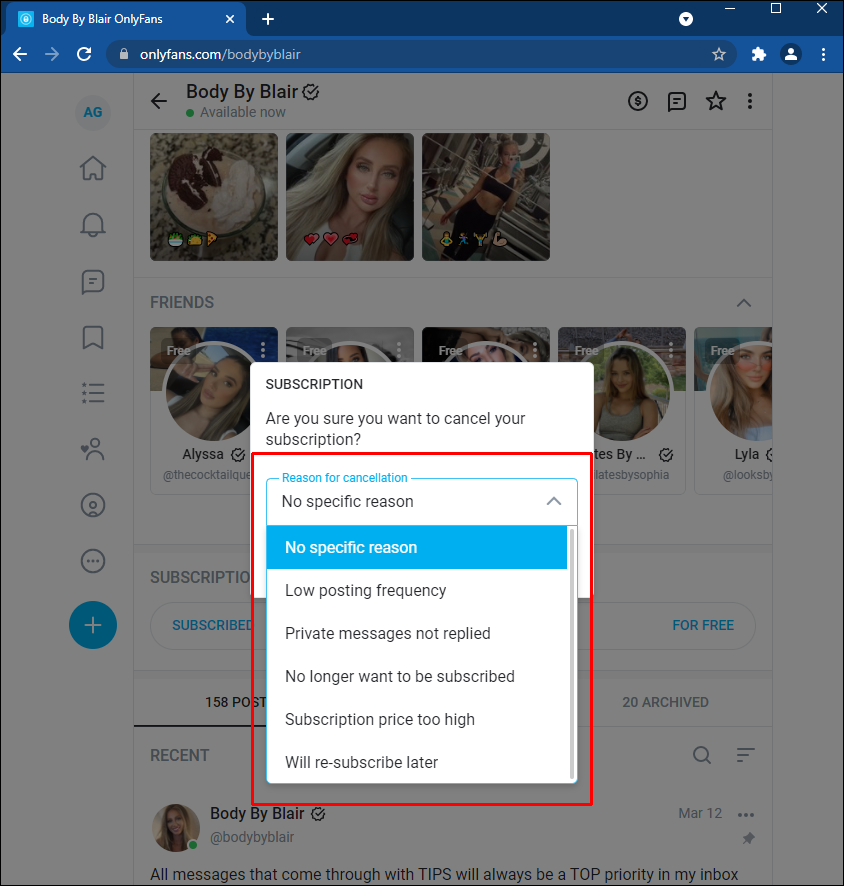
Moving between models changes the billing relationship. Cancelling a paid subscription ends access at the end of the current period, not immediately. Moving from free to paid adds a fixed monthly charge, while moving from paid to free removes it but shifts spending to unlocks and tips.
The table below compares what changes in each direction.
| Change | What happens |
|---|---|
| Paid to free | Subscription charge stops; unlocks and tips become the main cost. |
| Free to paid | Fixed monthly charge starts; some items may still be PPV. |
| Price increase on a paid page | Auto-renew stops; access lasts until the paid period ends. |
| Cancellation | Access continues until the current paid period ends. |
A price increase is the most common surprise. When a creator raises the subscription price, auto-renew stops and existing access lasts until the current paid period ends. The user then decides whether to resubscribe at the new price. That pause is a natural moment to compare the page with a free alternative.
Because OnlyFans has no built-in discovery feed or directory, switching also means finding pages through external listings. Ranking sites such as BestOnlyFans exist for that reason: they organise pages that the platform itself does not surface. If you are weighing the two models in practice, this onlyfans free access guide walks through how free access is structured.
Fit Test
The right model follows from a few honest questions about use. A light user can answer them in a minute, and the answers usually point in one direction.
- Do you open the page at least a few times a week? If yes, a paid subscription is easier to budget.
- Do you unlock specific items rather than browse a feed? If yes, a free page fits better.
- Do you want a fixed monthly cost? If yes, choose paid and treat the subscription as the only line.
- Do you dislike recurring charges? If yes, a free page with occasional unlocks avoids them.
- Do you follow many pages at once? If yes, several $5 subscriptions can add up; free pages scale better.
- Do you want to support one creator regularly? If yes, a paid subscription plus an occasional tip is direct.
A light user with one favourite page and a stable budget is usually better served by a paid subscription in the $4.99 to $15 range. A light user who follows several pages casually, unlocks rarely, and dislikes renewals is usually better served by free pages. The monthly totals only diverge once unlocks become frequent.
Neither model is cheaper in every case. The deciding factor is how often money leaves the account, not how often the page is opened. Track unlocks and tips for one month, compare the total with a $5 to $10 subscription, and the fit becomes clear. BestOnlyFans refreshes its rankings every month.
FAQ
Is a free OnlyFans page always cheaper than a paid one?
No. Free pages earn through pay-per-view and tips, so frequent unlocks can cost more per month than a $5 to $10 subscription.
What does a paid subscription actually include?
It covers the main feed for the paid period. Some items may still sit behind pay-per-view, and tips remain optional.
What happens if a creator raises the subscription price?
Auto-renew stops, and existing access lasts until the current paid period ends. You then choose whether to resubscribe.
How much of the money reaches the creator?
The platform fee is 20% on subscriptions, tips, and pay-per-view, so the creator keeps 80% of each payment.